Lewis Goodall: The Sharp Voice Shaping Modern British Political Journalism
Lewis Goodall is one of the most recognisable voices in modern British political journalism. Known for clear analysis, direct questioning and a strong grasp of policy, he has built a career across television, radio, podcasts, books and long-form journalism. His work often focuses on power, class, government choices and the real-life effects of politics on ordinary people.
He is widely known as a presenter of The News Agents, the major current affairs podcast he hosts with Emily Maitlis and Jon Sopel. He also works as Analysis and Investigations Editor at Global, where his journalism reaches a wide audience through audio, radio and digital platforms. His move into podcasting has helped him connect with people who want serious news explained in a more open and direct style.
Table of Contents
ToggleEarly Life of Lewis Goodall
Lewis Goodall was born on 1 July 1989 in Birmingham. His background has often shaped the way he looks at politics and society. He grew up with a close view of working-class life, public services and the pressures faced by families outside the centre of power. This gave his journalism a personal edge without making it narrow or one-sided.
Education also played a major role in his path. He studied at St John’s College, Oxford, where he developed his interest in politics, history and public affairs. His time at university helped him build the skills that later became central to his career: strong research, careful argument and confident communication.
Lewis Goodall Career Beginning
Goodall began his media career behind the scenes. Like many serious journalists, he did not start at the top. He worked his way through research, production and field reporting. These early roles gave him a firm base in how news is built, checked and delivered.
His early work included time at Granada Studios and the BBC. These roles taught him the value of preparation and accuracy. They also placed him close to the heart of British broadcast journalism, where speed matters but judgement matters even more.
Work at Sky News
A major stage in his career came at Sky News. There, he worked as a political correspondent and covered some of the most important events in British politics. His work included elections, party disputes, policy rows and the wider changes that followed Brexit.
At Sky, Goodall became known for explaining political events in plain language. He was not only focused on Westminster drama. He also cared about what decisions meant for schools, hospitals, wages, housing and communities. This made his work useful to viewers who wanted more than speeches and slogans.
BBC Newsnight and Policy Journalism
Goodall later became Policy Editor of Newsnight, one of the BBC’s most respected current affairs programmes. This was a key role because it placed him at the centre of serious national debate. He covered government decisions, economic pressure, social problems and major political change.
His work on Newsnight showed his strength as a journalist who could combine detail with human impact. Policy can often sound dry, but he made it clear and relevant. He looked at how choices made in government affected people’s lives across Britain.
Lewis Goodall on The News Agents
In 2022, Goodall joined Global and became part of The News Agents. The podcast quickly became one of the leading current affairs shows in the UK. Alongside Emily Maitlis and Jon Sopel, he brought sharp political insight and strong interviewing skills.
The show’s success reflects a wider shift in how people consume news. Many people no longer wait for evening bulletins. They want analysis on demand, with room for context and debate. Goodall fits this new age well. He has the discipline of a broadcast journalist and the freedom of a modern audio presenter.
Sunday with Lewis Goodall
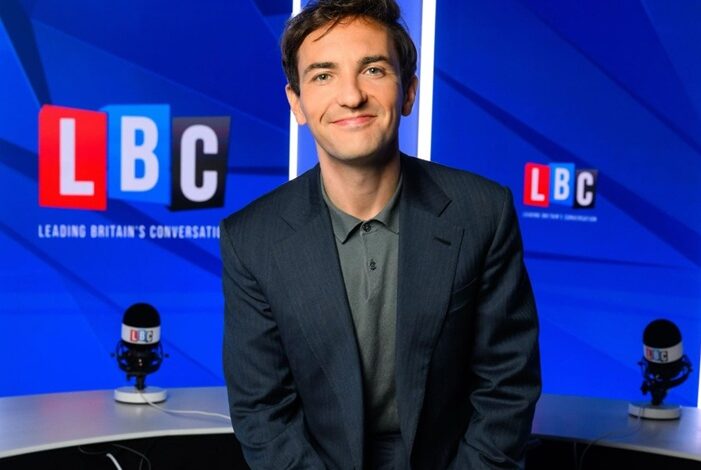
Goodall also presents Sunday with Lewis Goodall on LBC. The programme gives him space to discuss politics, society and the week’s biggest stories in depth. It also allows him to speak with politicians, experts, campaigners and members of the public.
Radio suits his style because it depends on clarity, pace and confidence. He can move from detailed policy points to wider moral questions without losing the audience. That skill has helped him become a trusted figure in current affairs broadcasting.
Lewis Goodall as an Author
Goodall is also the author of Left for Dead?: The Strange Death and Rebirth of the Labour Party. The book examines the Labour Party during one of its most dramatic modern periods. It focuses on the rise of Jeremy Corbyn, the struggles inside Labour and the forces that reshaped the party.
The book showed that Goodall was not only a daily news journalist. He could also handle long-form political writing. It gave him room to explore history, ideology, leadership and party identity in greater detail than television often allows.
Writing Style and Public Voice
Goodall’s style is clear, thoughtful and direct. He often avoids empty political language and tries to bring arguments back to facts, outcomes and people’s lives. His journalism is shaped by a belief that politics is not only a game played by leaders. It is also about schools, jobs, poverty, housing, care and opportunity.
He has also spoken about impartiality and the pressure placed on journalists. In modern media, political journalism can quickly become a target for critics from all sides. Goodall has argued that journalists should be fair, honest and rigorous, while also recognising that no person sees the world from nowhere.
Why His Work Connects
One reason Goodall connects with audiences is his ability to explain complex events without sounding distant. He can discuss budgets, party rules, strikes, elections and social change in a way that feels understandable.
He also brings energy to serious topics. He does not treat politics as theatre alone. He looks for the deeper causes behind events and the people affected by them. This helps his work stand out in a crowded media world.
Personal Life and Public Image
Goodall keeps much of his private life away from attention. His public identity is built mainly on his work rather than celebrity. This has helped him maintain focus on journalism, analysis and public debate.
He is active on social media, where he shares views, work updates and reactions to major events. Like many political journalists, he faces both praise and criticism online. Yet his career has continued to grow because his work has weight, discipline and a clear sense of purpose.
Lewis Goodall and Modern Political Debate
British politics has changed greatly during Goodall’s career. He has covered the effects of austerity, Brexit, leadership changes, public service pressure, the pandemic era, party realignments and major elections. Through these events, he has developed a reputation for taking policy seriously.
His work matters because the public needs journalists who can cut through noise. Politics can be confusing, especially when leaders use careful wording or avoid direct answers. Goodall’s strength is that he asks what a decision means, who benefits, who loses and what evidence supports it.
Impact on Younger Audiences
Goodall also represents a generation of journalists who moved smoothly from television to podcasting and digital platforms. His success shows that serious journalism can still attract wide attention when it is clear, lively and well informed.
Younger audiences often prefer formats that feel less formal than old-style news. Podcasts allow more personality, longer discussion and deeper explanation. Goodall has used that space well while keeping the standards of professional journalism.
Conclusion
Lewis Goodall has become an important figure in British media because he combines strong reporting with clear analysis and a deep interest in how politics affects real life. From Sky News to BBC Newsnight, from political writing to Global and The News Agents, his career shows steady growth and serious purpose.
He is not only a presenter or commentator. He is a journalist shaped by background, education, experience and a clear interest in public life. At a time when trust in politics and media is often under pressure, his work shows the value of asking direct questions, explaining policy clearly and keeping the public at the centre of the story.