Michael Brin: The Mathematician, Mentor and Visionary Behind a Lasting Academic Legacy
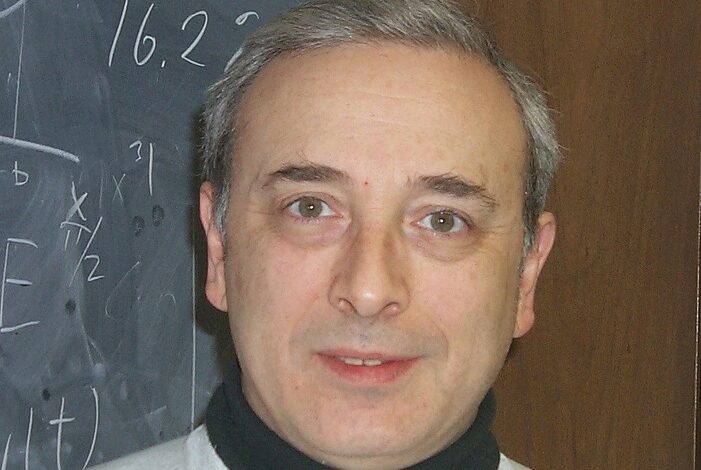
Michael Brin is a Russian-American mathematician, teacher, mentor and philanthropist. He is best known for his long career at the University of Maryland, College Park, where he became a respected professor of mathematics. He is also known as the father of Sergey Brin, the co-founder of Google. Yet his own life story stands strongly on its own.
Born as Mikhail Brin, he built a career in one of the most demanding areas of mathematics. His main work has centred on dynamical systems and Riemannian geometry. These fields study movement, change, shape and structure. They are not simple subjects, but they help experts understand how complex systems behave.
His journey from the Soviet Union to the United States adds depth to his story. It is a story of education, courage, family sacrifice and service to learning. His name is now tied not only to research but also to prizes, fellowships, maths centres and programmes that support young talent.
Early Life of Michael Brin
Family Roots and Education
Michael Brin was born in the Soviet Union and grew up in a world where education was highly valued. He studied mathematics at a high level and became part of a strong academic culture. His talent helped him enter a field that demands patience, deep thought and strong discipline.
He and his wife, Eugenia Brin, both studied at Moscow State University. This was one of the leading centres of science and mathematics in the Soviet Union. Their shared respect for learning shaped the future of their family.
Life in the Soviet Union
Life in the Soviet Union brought serious limits for Jewish families. Michael and Eugenia faced barriers that affected work, study and personal freedom. In 1978, the family applied for an exit visa. This was a risky choice at that time. Many families who tried to leave faced pressure, job loss and fear.
Their visa was granted the following year. Michael, Eugenia, their young son Sergey, and Michael’s mother Maya left for a new life in the United States. The move changed the family’s future and opened new doors for their children and careers.
Michael Brin at the University of Maryland
A Long Academic Career
After arriving in America, Michael Brin became a professor of mathematics at the University of Maryland. He worked there for 31 years and later became Professor Emeritus. His university page also notes that he is retired from the Department of Mathematics.
At Maryland, he taught, guided students and added to the strength of the mathematics department. His work helped build a strong base for research in dynamical systems. He was not only a classroom teacher. He was also part of a wider academic group that helped Maryland gain respect in advanced mathematics.
Research Interests
His research interests include dynamical systems and Riemannian geometry. Dynamical systems study how things change over time. These systems can be found in physics, biology, engineering, economics and many other areas. Riemannian geometry studies curved spaces and has links to physics and modern geometry.
Among his known papers are works on nonpositive curvature, spherical polyhedra, Hamiltonian systems and partially hyperbolic diffeomorphisms. These subjects are technical, but they show the range of his mathematical skill.
Michael Brin and Dynamical Systems
Why His Field Matters
Dynamical systems may sound abstract, but the field has real importance. It helps mathematicians study motion, order and chaos. It can explain patterns that change over time, from planets and fluids to weather and biological systems.
Michael Brin worked in this field during a period when dynamical systems grew in power and reach. His research helped connect ideas from geometry and motion. He also worked with other experts and contributed to a culture of serious study.
His Book on Dynamical Systems
One of his major academic contributions is the book Introduction to Dynamical Systems, written with Garrett Stuck. The book gives graduate students a wide entry into the subject. It covers topological dynamics, symbolic dynamics, ergodic theory, hyperbolic dynamics, one-dimensional dynamics, complex dynamics and entropy.
The book has become useful for students who want a clear path into a difficult field. It shows his strength not only as a researcher but also as a teacher who could organise deep ideas in a careful way.
Michael Brin as a Mentor
Graduate Students and Academic Guidance
Michael Brin guided graduate students during his academic career. His university page names Fernando Garibay-Bonales and Joseph P. Previte among his graduate students. This part of his work matters because strong mathematics depends on mentorship.
A good mentor does more than explain theory. He helps students learn how to think, question and build proof. In mathematics, this training can shape a career for life. Through his students and colleagues, his influence continues beyond his own papers.
Support for Young Scholars
His support for young scholars did not stop with teaching. In 2005, he funded the Brin Postdoctoral Programme at the University of Maryland. This programme supports mathematicians who have recently completed, or are about to complete, a doctorate. It gives promising researchers time, guidance and space to grow.
This kind of support is powerful. It helps young academics move from study into independent research. It also strengthens the future of mathematics as a whole.
Michael Brin Prize in Dynamical Systems
An International Award
In 2008, Michael Brin established the Michael Brin Prize in Dynamical Systems. The prize honours early-career mathematicians who have made strong advances in dynamical systems and related fields.
The prize has become an important honour in the mathematics world. It is given for clear mathematical achievements, often through major papers or a group of connected works. The aim is to recognise rising scholars at a stage when support and respect can make a lasting difference.
Prize Legacy
The first prize was awarded in 2008. From 2009 to 2017, it was awarded every two years. Since 2018, it has been awarded each year. Winners have included major names in modern mathematics, including Artur Avila, who later won the Fields Medal.
This prize shows Michael Brin’s belief in building the future of the subject, not only celebrating the past. It rewards courage, originality and deep work.
Michael Brin and His Family
Marriage to Eugenia Brin
Michael Brin was married to Eugenia Brin for more than five decades. Eugenia was a Russian immigrant, a retired NASA scientist and a strong supporter of science and education. She worked on climate and weather forecasting at NASA’s Goddard Space Flight Center.
Together, they built a family shaped by learning, service and high standards. Their sons, Sergey Brin and Samuel Brin, both studied at the University of Maryland. Sergey later became one of the most famous technology founders in the world.
Father of Sergey Brin
Many people know Michael Brin because of Sergey Brin, co-founder of Google. Sergey was born in Moscow in 1973 and moved to the United States as a child. The family’s move gave him the chance to grow up in Maryland and study in American schools.
Michael’s love of mathematics clearly shaped Sergey’s early path. Sergey studied mathematics and computer science at the University of Maryland before going to Stanford University. His later success with Google became part of global technology history.
Philanthropy and the University of Maryland
Major Gifts for Learning
Michael Brin and Eugenia Brin became major benefactors of the University of Maryland. Their giving supported mathematics, computer science, climate science, Russian studies, performing arts and student welfare.
They helped establish endowed chairs, fellowships, research centres and creative programmes. Their gifts were not narrow. They supported both science and the arts, showing a wide view of education.
Brin Mathematics Research Center
One of their most important gifts helped create the Brin Mathematics Research Center. This centre brings mathematicians to Maryland for workshops, lectures, summer schools and research activity. It gives the university a stronger place in national and international mathematics.
In 2024, the couple gave $27.2 million to support mathematics research and outreach. This gift endowed the centre, created new endowed professorships and launched the Brin Maryland Mathematics Camp for talented high-school students.
Michael Brin’s Lasting Legacy
Michael Brin’s legacy is not built on fame alone. It rests on teaching, research, courage, family and generosity. He moved across countries, rebuilt his career in America and spent decades serving mathematics.
His work in dynamical systems and geometry placed him among serious scholars. His book helped students enter a hard field. His prize honours young mathematicians. His gifts to Maryland continue to support research and learning.
He also stands as part of a wider family story. His wife Eugenia built her own scientific career. His son Sergey helped change the digital world. Yet Michael’s own path remains deeply meaningful.
He represents the power of education carried across borders. His life shows how one scholar can shape students, strengthen a university and support future generations. For that reason, Michael Brin remains an important name in mathematics, higher education and modern academic philanthropy.